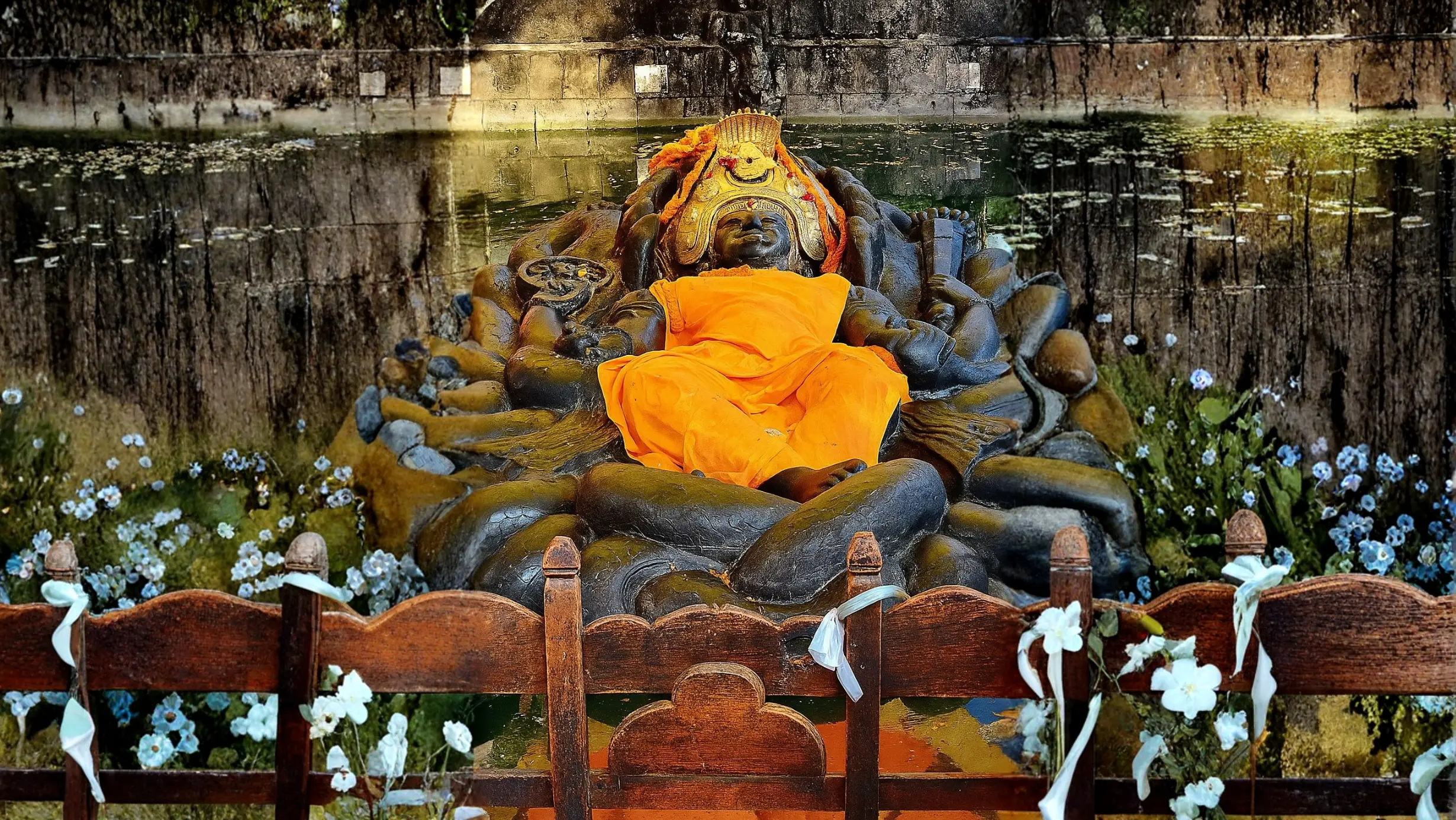
Sleeping Vishnu Nepal: Guide to Budhanilkantha Temple
Plan your visit to the iconic Sleeping Vishnu Nepal. Discover this colossal, floating deity and ancient mystery at Budhanilkantha Temple, Kathmandu Nepal
Nestled at the foot of the Shivapuri Hills in Kathmandu, the ancient Budhanilkantha Temple is a site of profound spiritual significance. Here, you will discover the magnificent, monolithic statue of sleeping vishnu nepal, a deity serenely reclining in a sacred pool. As local travel experts with years of on-the-ground experience, we know this is more than just a statue; it’s a living piece of Lichhavi-era artistry, a cornerstone of Hindu mythology, and a place of palpable peace. Let us guide you through the experience of witnessing this colossal, 1,500-year-old carving, feeling the powerful spiritual energy that has drawn pilgrims and travelers for centuries.
Key Takeaways
- The Budhanilkantha Temple houses Nepal’s largest stone sculpture, a 5-meter long reclining Vishnu carved from a single block of black basalt.
- While direct access to the water’s edge is for Hindu devotees, the dedicated viewing areas offer an excellent, unobstructed perspective for all visitors.
- The best season for sleeping vishnu nepal is autumn (Sept-Nov), but a morning visit year-round allows you to witness the captivating daily ‘puja’ (worship).
- A visit here is easily integrated into a full-day sleeping vishnu nepal itinerary, which can include Shivapuri National Park or the Kopan Monastery.
This comprehensive guide, crafted from our team’s firsthand knowledge at Mantra Holidays, is your definitive resource for how to plan sleeping vishnu nepal in 2025. We’ll delve into the stories, logistics, and cultural nuances—including the typical sleeping vishnu nepal cost and package options—to transform your visit from a quick stop into a deeply memorable journey.
The Grandeur of Sleeping Vishnu Nepal: A Floating Miracle
What makes the Sleeping Vishnu so utterly captivating? Firstly, its sheer scale is awe-inspiring. Carved from a single piece of black basalt, the statue depicts Lord Vishnu in his cosmic slumber, reclining on the coiled body of the multi-headed serpent king, Ananta Shesha. This form, known as Anantashayana, represents the tranquil state of the universe between creation cycles. Secondly, the massive statue appears to float weightlessly in its 13-meter-long pool, or ‘kund.’ This remarkable feat has baffled observers for ages. While scientific analysis points to the stone’s silica-based, low-density properties, for the faithful, its buoyancy is nothing short of a divine miracle, a testament to the deity’s power.
Legends Carved in Stone: The Story of Sleeping Vishnu
The origins of the Budhanilkantha statue are beautifully woven into legend. One popular tale recounts its discovery by a farmer and his wife in the 7th century. As they worked their field, their plough struck a stone, and to their astonishment, blood began to flow from the gash. Upon careful excavation, the magnificent reclining form of Vishnu was unearthed, and the site was instantly consecrated as sacred ground. The statue is widely believed to have been sculpted during the reign of the Lichhavi King Vishnugupta, a period renowned for its artistic achievements.
The Royal Curse
Perhaps the most enduring legend tied to the temple is the royal curse. It is believed that King Pratap Malla (1641–1674) had a prophetic dream, warning him that he and his royal successors would face immediate death if they ever laid eyes upon the original Budhanilkantha statue. Heeding the divine warning, the king never visited. Instead, he commissioned a smaller replica to be built at the Kathmandu Durbar Square for his worship. In a remarkable display of faith, this tradition has been upheld by Nepal’s monarchs for centuries, adding a fascinating layer of mystique to every visit.
How to Plan Your Sleeping Vishnu Nepal Visit in 2025
A well-planned visit ensures you can fully absorb the spiritual atmosphere of this sacred site. Drawing from our experience in creating countless successful tours, here is everything you need to know about planning your trip, from the best season to potential costs.
Best Season for Sleeping Vishnu Nepal
While Kathmandu is a year-round destination, the timing of your visit can significantly enhance your experience.
- Autumn (September – November): This is undoubtedly the prime season. The post-monsoon air offers crystal-clear skies, comfortable temperatures, and often, stunning Himalayan views. The temple is vibrant with pilgrims, making it a culturally rich time to visit.
- Spring (March – May): Our second favorite season. The weather is warm and pleasant, and blooming flowers add color to the landscape. It’s an ideal time to combine your temple visit with a hike in the nearby national park.
- Winter (December – February): Expect cool, foggy mornings followed by clear, sunny afternoons. The smaller crowds during this period offer a more peaceful and contemplative experience at the temple.
- Monsoon (June – August): The rainy season brings lush, green scenery. Based on our experience, we advise clients to visit in the morning during these months, as rain showers are more frequent in the afternoon.
For a truly unforgettable cultural immersion, plan your visit during the Haribodhini Ekadashi festival in late October or early November. Thousands of pilgrims gather to celebrate Vishnu’s awakening, filling the air with devotion and festivity.
Temple Hours and Daily Rituals
The temple is typically open from 5:00 AM to 6:00 PM. We highly recommend timing your visit between 9:00 AM and 10:00 AM. This is when the priests perform the main daily puja—a mesmerizing ritual of bathing, dressing, and adorning the deity with flowers and offerings. The air fills with the scent of incense and the sound of chanting, offering a genuine and powerful insight into Hindu devotional practices.
How to Get to Budhanilkantha from Kathmandu
Located approximately 10 kilometers north of the main tourist hub of Thamel, Budhanilkantha is easily accessible. Understanding your travel options helps you manage the overall sleeping vishnu nepal cost.
- Private Tour with Mantra Holidays: This is the most seamless and enriching option. Our sleeping vishnu nepal package includes a comfortable private vehicle and, most importantly, an expert guide to illuminate the history and symbolism you would otherwise miss.
- Taxi: Taxis are readily available in Kathmandu. A one-way trip from Thamel should cost between NPR 1,200 – 1,800. We always advise our clients to negotiate the fare before starting the journey or to request the use of the meter.
- Local Bus: For the adventurous traveler on a tight budget, public buses from Kathmandu’s Ratna Park are an option. While inexpensive, the journey can be crowded and slow—an authentic local experience for those prepared for a bit of a hustle.
A Pilgrim’s Guide: Cultural Etiquette and What to Expect
As with any sacred site in Nepal, respectful conduct is paramount. Here are some essential tips we share with our guests to ensure a smooth and positive visit to the Sleeping Vishnu temple.
Dress Code and Conduct
Dress modestly, ensuring your shoulders and knees are covered. You will need to remove your shoes before entering the main temple precinct, so slip-on footwear is a practical choice. It is a deeply ingrained custom in Hindu temples to walk around the central shrine in a clockwise direction, a practice known as ‘parikrama’.
For Our Non-Hindu Guests
It’s important to be aware that direct access to the edge of the sacred pool is reserved for Hindu practitioners. Please do not let this deter you. The temple complex is thoughtfully designed with an outer perimeter fence that provides a perfectly clear, close-up, and respectful view of the entire statue and the ongoing rituals. From our extensive experience, this vantage point is ideal for both photography and quiet contemplation, allowing you to witness the devotion without feeling intrusive.
Creating the Perfect Sleeping Vishnu Nepal Itinerary
A visit to Budhanilkantha is a highlight in itself, but its strategic location makes it the perfect anchor for a memorable full-day exploration. Here’s how you can build a fantastic sleeping vishnu nepal itinerary:
- Shivapuri Nagarjun National Park: Just a short drive uphill from the temple lies the entrance to this pristine national park. It’s a paradise for nature lovers, offering superb hiking trails, excellent birdwatching, and, on clear days, breathtaking views of the Kathmandu Valley and the Himalayas beyond.
- Kopan Monastery: Also located nearby, this famous Tibetan Mahayana Buddhist monastery offers a serene atmosphere and a fascinating cultural counterpoint to the Hindu traditions at Budhanilkantha. A visit here provides a broader perspective on the valley’s spiritual diversity.

Why a Guided Tour with Mantra Holidays is Your Best Choice
Visiting the Sleeping Vishnu is one thing; truly understanding its soul is another. When you book a sleeping vishnu nepal package with us, you aren’t just paying for transport; you are unlocking the stories behind the stone. Our professional, government-licensed guides are passionate storytellers who reveal the nuances of the art, the depth of the legends, and the meaning behind the sacred rituals. We manage all the logistics, allowing you to immerse yourself fully in the spiritual ambiance of this incredible place. We can expertly craft a personalized sleeping vishnu nepal itinerary that combines the temple with a Shivapuri hike or other valley highlights, perfectly tailored to your interests. Let us handle the details, so you can focus on the experience of a lifetime.
Frequently Asked Questions
Can non-Hindus enter the Budhanilkantha temple?
Yes, everyone is welcome to enter the main temple complex. However, direct access to the edge of the sacred pool where the Sleeping Vishnu statue lies is reserved for Hindu devotees. There is an excellent viewing area from the surrounding fence that offers a clear and complete view of the statue for all visitors.
What is the best time of day to visit the Sleeping Vishnu?
The ideal time to visit is in the morning, typically between 9:00 AM and 10:00 AM. This is when the daily puja (worship ceremony) takes place, and you can witness the priests bathing and adorning the statue with flowers and other offerings. The morning light is also beautiful for photography.
What is the legend behind the Sleeping Vishnu statue?
The most famous legend is about King Pratap Malla from the 17th century, who had a dream that he or any of his descendants would die if they visited the statue. Because of this prophetic dream, no reigning monarch of Nepal has ever visited the Budhanilkantha temple, a tradition that continues to be respected.
How long does it take to get to Budhanilkantha from Thamel?
By private car or taxi, the journey from Thamel to Budhanilkantha typically takes about 30 to 45 minutes, depending on traffic conditions in Kathmandu. A local bus can take over an hour.
Is there an entrance fee for the Sleeping Vishnu temple?
As of early 2025, there is no formal entrance fee for tourists to enter the Budhanilkantha temple complex. However, small donations are welcome and help with the upkeep of this sacred site.
What should I wear when visiting Budhanilkantha?
It is important to dress modestly out of respect. Both men and women should ensure their shoulders and knees are covered. You will also need to remove your shoes before entering the inner courtyard, so shoes that are easy to slip on and off are recommended.
Book Your Adventure with Mantra Holidays
Our Office
Hattisar, Kathmandu, Nepal
Get in Touch
- Tel: +977-1-4545597, +977-1-4545598
- Mobile: +977-9801917782, +977-9851019198
- Email:[email protected]